The Dillon rums

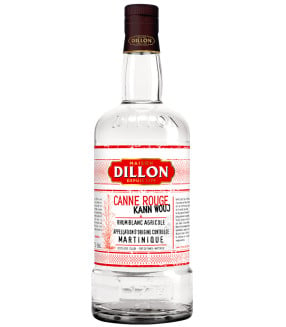
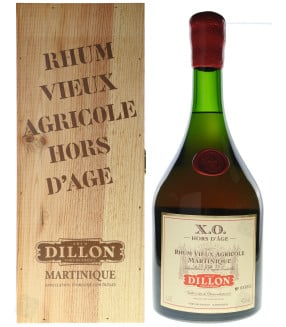
Since 1779, Dillon rum owes its name to the famous Count Arthur Dillon. Produced with the rigor of a grand cru with sugar cane juice from plantations in Martinique, the distillery Dillon produces an agricultural rum A.O.C. Martinique exceptional.

Flag bearer of the purest Martinican tradition and gold medalist at many competitions.

Read more
Showing 1-27 of 27 item(s)

The beginnings of the Dillon plantation with Count Arthur Dillon

The Dillon plantation traces its roots back to 1779 when Count Arthur Dillon, a young captain of Irish descent, arrived in Martinique after his involvement in the American Revolutionary War. He then met an heiress from a family of planters, a cousin of Joséphine de Beauharnais, and together they managed the Girardin plantation which had been cultivating sugar cane since 1690.

The onset of sugar and rum production in the 19th century

It was only during a change of ownership in the 19th century that sugar and rum production truly began at the Dillon plantation. Despite significant investments, such as the arrival of the railroad, the plantation was heavily impacted by the sugar crisis of 1866, leading to another change in ownership with Louis Domergue at the helm.

The challenges faced by the plantation

The trials for the Dillon plantation didn't end there: a devastating cyclone hit in 1891, taking the life of Louis Domergue and wreaking havoc on the estate. The plantation then made significant investments in its distillery, quadrupling its agricultural rum production while building an aging cellar capable of holding 3000 barrels.

The acquisition of Bardinet by Martiniquaise and the AOC recognition

In 1993, the Martiniquaise group acquired Bardinet, before the Dillon rums were granted AOC Martinique status in 1996. Today, Dillon still works with its own sugar cane,and although rum production now takes place in Saint-Pierre at Depaz distillery, aging and bottling still occur at the historic site in Fort de France.

The Dillon rum manufacturing process

  • The cane is quickly pressed, and its juice is filtered and slightly diluted before undergoing fermentation for 24 to 48 hours.
  • This results in a cane wine with an alcohol content of between 4% and 6%.
  • It is then aged for at least three years to become "aged rum," which gives it a pleasing smoothness for tasting or even in ti'vieux (a traditional cocktail).

The Comte Arthur Dillon Reserve: a unique VSOP blend

The Comte Arthur Dillon Reserve offers a VSOP blend composed of rums aged for at least four to five years, also aged in oak barrels. This exceptional rum is a testament to the ancestral expertise and passion for producing quality rum that has spanned centuries at the Dillon plantation.

Key highlights of the Comte Arthur Dillon rum

  • A unique blend of rums aged four to five years.
  • Aged in oak barrels, giving the rum a woody and complex flavor.
  • A sweetness and rich aromas that reveal themselves gradually when tasted.
  • Perfect to be enjoyed neat or in a traditional cocktail such as the ti'vieux.

The Dillon plantation is a true story of passion and perseverance. Evolving despite the tests of time, it represents a strong historical heritage and a centuries-old expertise in sugar cane cultivation and the production of exceptional rums, of which the Comte Arthur Dillon Reserve is a prime example.